Japanese Illustration Sites: Top 7 Free & Paid in 2026
If you've ever needed a Japanese-style illustration for a presentation, a social media post, or a client project, you've probably ended up on one of a handful of Japanese illustration sites — often through a friend's recommendation, without a clear picture of which one actually fits your needs. This guide walks through seven that matter in 2026, honestly, with the trade-offs each one carries — both free options and paid ones.
Why Japanese Illustration Sites Dominate Asian Design
The Japanese illustration style — soft palettes, clean outlines, friendly proportions — has quietly become the default look for a huge chunk of Asian business communication. It shows up in Korean startup pitch decks, Taiwanese educational content, Thai marketing materials, and Chinese social media as often as it does inside Japan. The reason is simple: the style reads as friendly, professional, and non-threatening without feeling generic. Stock photos feel corporate; Western clip art feels dated; Japanese illustrations hit a sweet spot.
The problem is that most designers rely on 1-2 sites they happened to discover first. Meanwhile, the ecosystem has grown into a large collection of sources, each with its own licensing quirks, style specialties, and download restrictions.
The Top 7 Japanese Illustration Sites
1. Irasutoya (いらすとや) — irasutoya.com
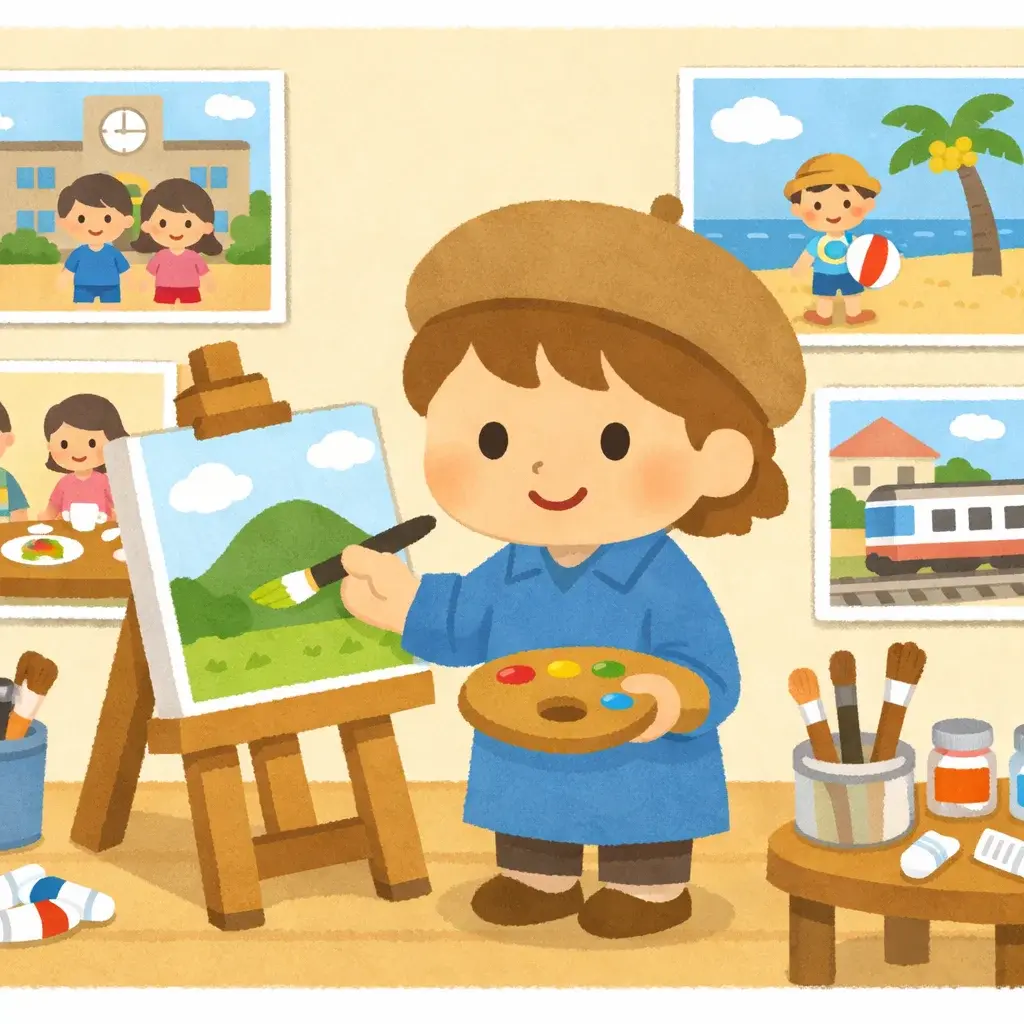
The one everyone starts with. Free for personal use, and free for commercial use up to 20 images per single work or product, with straightforward attribution rules. The library covers practically every conceivable topic — from office scenes to elaborate historical vignettes. The style is distinctive: soft pastel colors, dot eyes, cheerful expressions. Perfect for presentations, tutorials, and educational content.
Best for: quick presentation illustrations, educational materials, non-threatening business communication. Watch out for: the 20-image cap on single commercial works; heavy use across the internet means readers may already have seen your specific illustration.
2. Illust-AC (イラストAC) — ac-illust.com
Massive free library — well over 100,000 illustrations from Japanese artists. Requires a free account, with daily download limits unless you upgrade. Style variety is much wider than Irasutoya: you'll find flat vector art, watercolor styles, anime-influenced pieces, and everything in between.
Best for: variety and volume when Irasutoya's style doesn't fit. Watch out for: quality varies a lot between contributors; some illustrations look distinctly amateur; the free tier is genuinely limited.
3. Silhouette-AC (シルエットAC) — silhouette-ac.com
Same publisher as Illust-AC, but focused entirely on silhouettes and monochrome designs. If you're building infographics, wayfinding materials, or minimalist presentation icons, this is where you go.
Best for: silhouettes, icons, monochrome designs. Watch out for: same account and download limits as Illust-AC.
4. Pixta (ピクスタ) — pixta.jp
Japan's leading paid stock illustration marketplace. Quality is professional-grade, licensing is clear, and the selection covers modern Japanese design trends including anime-influenced illustrations and premium business scenes. Individual illustrations run ~$4-35 each; subscriptions start around $15-30/month depending on tier.
Best for: professional projects where licensing must be defensible and quality has to be publication-grade. Watch out for: the price adds up fast; the interface is Japanese-first with imperfect English.
5. Loose Drawing — loosedrawing.com
A newer entrant that's quickly become a favorite among designers who want something more modern than Irasutoya. Minimalist black-outline illustrations, occasional subtle color, distinctive rough-line aesthetic. Free for both personal and commercial use with clear terms.
Best for: modern minimalist illustrations, wireframes, editorial content that wants a "designer-drawn" feel. Watch out for: smaller library than the AC sites; the style is intentionally narrow.
6. Freepik (Japanese filter) — freepik.com
The largest international illustration platform, with a strong collection of Japanese-style illustrations from contributors worldwide. Free tier available with attribution, premium tier removes attribution and unlocks the full library. Search "Japanese" or "kawaii" to filter.
Best for: variety and volume, mixing Japanese-style with other aesthetics, international projects. Watch out for: quality varies between contributors; free tier requires attribution and daily download limits.
7. Adobe Stock (Japan) — stock.adobe.com
International reach, but with a large collection from Japanese illustrators. Best-in-class licensing clarity, integrates directly with the Adobe suite. Paid subscription only, but includes photos, videos, and templates alongside illustrations.
Best for: professional design teams already using Adobe Creative Cloud. Watch out for: it's a paid subscription; if you only need illustrations, cheaper options exist.
The Common Problem With All Seven
Each of these sites — even Pixta and Adobe Stock — shares the same fundamental limitation: you can only download what someone else already drew.
- Need a Japanese-style illustration of a specific scenario? You might spend an hour searching and still not find it.
- Need a character wearing a specific outfit? Hope one exists that matches.
- Need three related illustrations in the same style featuring the same character? Almost impossible without commissioning custom art.
- Need something in Irasutoya style but the topic isn't in Irasutoya's 20,000+ existing illustrations? You're stuck.
Every site indexes the past — the illustrations that already exist. The moment your project needs something specific, you're back to browsing, hoping, and compromising.
When AI Generation Beats All Seven Sites
This is where AI-generated Japanese-style illustrations changed the equation in 2026. Instead of browsing existing libraries, you describe what you need, and a specialized AI generates it — in seconds, in the style you want, exactly matching your scenario.
Practically speaking:
- Speed: 15-30 seconds per illustration vs. minutes-to-hours of search.
- Specificity: any outfit, any pose, any scene, any combination.
- Consistency: use the same character description across multiple images to build a coherent set.
- Cost: a $10/month AI plan produces hundreds of custom illustrations; stock subscriptions cost 3-10× more.
- Style coverage: modern AI tools ship with multiple Japanese-style options — Irasutoya, anime, chibi, watercolor, and more — in one platform.
The trade-off: AI-generated illustrations aren't "perfect" every time, and licensing works differently (rights cover the AI output, not any brand the style references). For most real projects, the flexibility wins.
Making the Right Choice
If your project needs 1-3 illustrations on a common topic, one of the free sites above is fine — pick Irasutoya for cute business content, Illust-AC for style variety, Pixta if you need premium quality.
If your project needs specific scenarios, consistent characters, or a matching set of illustrations, or if you're going to be creating illustrations regularly for content marketing, presentations, or product design, the AI approach saves days of search time and produces custom results that no stock site can match.
Read our free AI cartoon images and commercial licensing guide for the honest breakdown of what commercial rights actually cover with AI-generated illustrations, and check our best free Irasutoya alternatives if you want to compare specific alternatives head-to-head.

The Japanese illustration ecosystem is richer than most designers realize. When your project needs illustrations that don't exist yet, browse our 7 available styles — Irasutoya, Ghibli, Chibi, Anime, Pixel Art, Watercolor, and Scribble — and pick the one that fits your scene.