What is Irasutoya Style? The Art Behind Japan's Most Iconic Illustrations
If you have ever browsed a Japanese website, opened a presentation made by a Japanese colleague, or scrolled through social media in East Asia, you have almost certainly encountered irasutoya style illustrations. These cheerful, soft-colored characters with their signature dot eyes are everywhere — and for good reason.
But what exactly is irasutoya style? Where did it come from, and why has it become one of the most recognized illustration styles on the internet? In this guide, we break down everything you need to know.
The Origin and History of Irasutoya Style
The irasutoya style traces its roots to a single website: irasutoya.com, created by Japanese illustrator Takashi Mifune. Launched in 2012, the site offered thousands of free-to-use illustrations covering an astonishing range of topics — from everyday activities like cooking and commuting to highly specific scenarios like "a person who accidentally sent a message to the wrong group chat."
Mifune published new illustrations almost daily, and by the mid-2010s, irasutoya had become a cultural phenomenon in Japan. The illustrations appeared in school handouts, government notices, corporate presentations, and news broadcasts. The sheer volume and variety of the library, combined with its generous licensing terms, made irasutoya the default choice for anyone in Japan who needed a quick, friendly illustration.
Over time, the distinctive visual language of these illustrations became so widely recognized that "irasutoya style" evolved into a genre of its own — an aesthetic shorthand for approachable, non-threatening visual communication.
Visual Characteristics of Irasutoya Style
What makes an illustration look like irasutoya style? Several consistent design choices define the aesthetic:
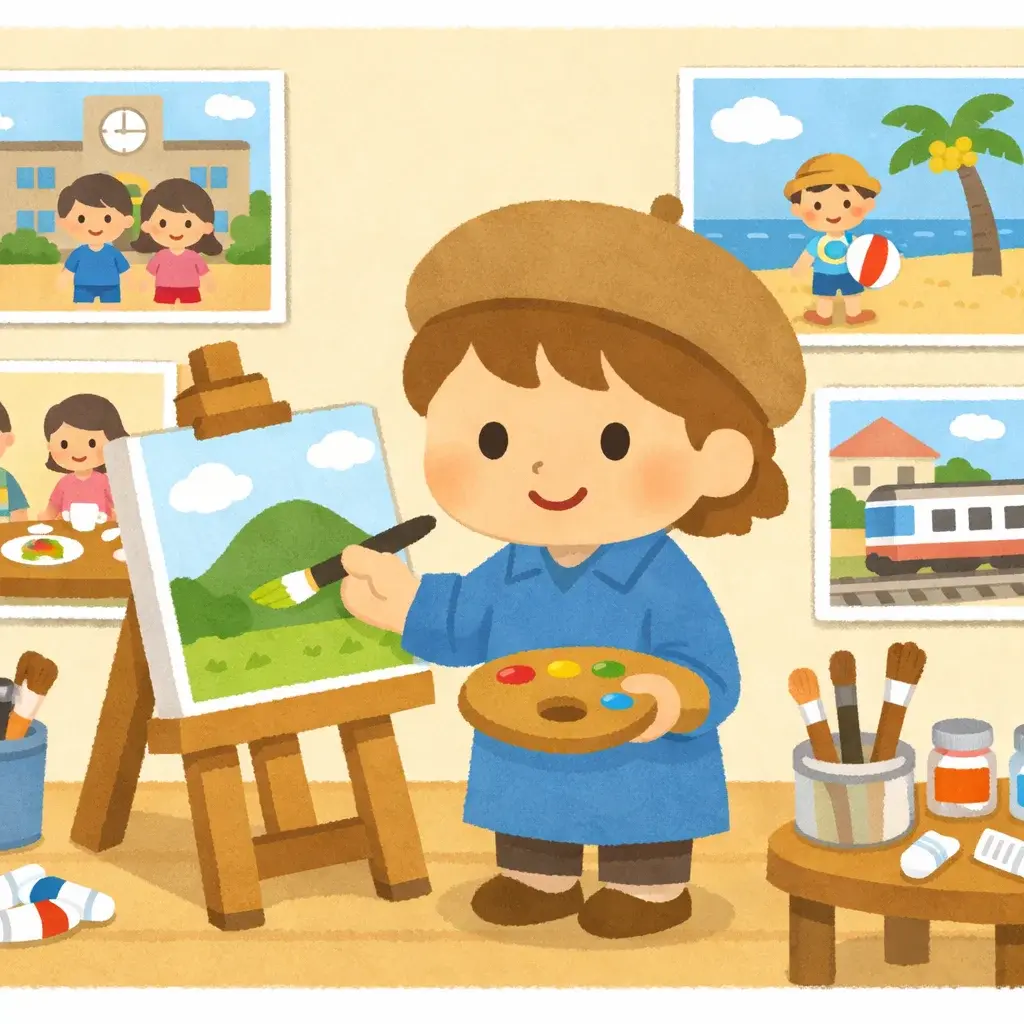
- Soft, Pastel Colors: The palette leans toward warm pastels — gentle pinks, light blues, soft yellows, and muted greens. There are no harsh neons or stark contrasts.
- Dot Eyes: Characters have simple black dot eyes, sometimes with a small highlight. This minimal approach gives faces a universal, friendly expression that works across cultures.
- Clean Outlines: Each figure is defined by smooth, clean outlines with consistent stroke width. There is no sketchy or rough linework.
- Flat Design: Irasutoya illustrations avoid heavy shading or complex gradients. The look is flat and two-dimensional, which keeps the visual style lightweight and easy to read at small sizes.
- Watercolor-Like Texture: A subtle watercolor texture gives the illustrations warmth and a hand-painted quality, distinguishing them from purely digital vector art.
- Round, Friendly Proportions: Characters tend to have slightly oversized heads, rounded bodies, and soft postures that convey approachability.
Together, these elements create illustrations that feel warm, inclusive, and just a little bit playful — the hallmarks of true irasutoya style.
Why Irasutoya Style Became So Popular
The popularity of irasutoya was not accidental. Several factors drove its massive adoption:
-
Free and Easy to Use: The original irasutoya.com offered illustrations for free with minimal restrictions. This removed the biggest barrier for teachers, small businesses, and government agencies who needed quality visuals but had no design budget.
-
Incredible Breadth of Topics: With over 20,000 illustrations covering nearly every imaginable scenario, users could almost always find exactly what they needed. This specificity — an illustration for "a person receiving bad news on the phone" rather than just "a person on the phone" — was a game changer.
-
Cultural Neutrality: The soft, non-aggressive aesthetic of irasutoya style makes it appropriate for virtually any context. It works in a children's worksheet and a corporate safety manual alike.
-
Consistency: Every illustration shares the same visual DNA. When you use multiple irasutoya images together, they look cohesive, which is rare with free illustration libraries.
-
Internet Culture: The style became a meme format in Japan and beyond. People began creating parodies and remixes, which only increased its visibility and cultural cachet.
Common Use Cases for Irasutoya Style
Today, irasutoya style illustrations appear in a wide variety of contexts:
- Presentations and Slide Decks: The clean, friendly look is perfect for business and educational presentations. Characters add personality without distracting from the content.
- Educational Materials: Schools and universities across Japan use irasutoya images in worksheets, posters, and e-learning platforms.
- Social Media Content: Bloggers, influencers, and brands use the style for thumbnails, explainer graphics, and reaction images.
- Signage and Public Communication: Hospitals, train stations, and local governments use irasutoya-style visuals for wayfinding and public health messaging.
- Stickers and Merchandise: The characters have been adapted into LINE stickers, emoji sets, and printed goods.
How AI Can Now Generate Irasutoya Style Images
For years, the only way to get irasutoya style illustrations was to use the ones already published on the original site. If your specific idea was not covered, you were out of luck — unless you could draw it yourself.
That changed with the rise of AI image generation. Modern AI models can now understand and reproduce the visual characteristics of irasutoya style — the pastel palette, dot eyes, clean outlines, and flat composition — based on a simple text description. This means you can generate a completely custom illustration in irasutoya style for any scenario you can imagine.
Want a capybara in a business suit giving a presentation? A group of cats celebrating a birthday? A robot learning to cook? With an irasutoya maker powered by AI, all of these are possible in seconds.
How Irasutoya.pro Recreates This Style
Irasutoya.pro is an AI-powered irasutoya maker built specifically to generate high-quality illustrations in authentic irasutoya style. Unlike generic AI art tools, it is fine-tuned to capture the exact aesthetic — the right color temperature, the correct proportions, the distinctive dot eyes, and the subtle watercolor texture that makes irasutoya illustrations feel warm and human.
Here is what makes it stand out:
- Style Accuracy: The AI has been trained to match the specific visual language of irasutoya, not just a generic "cute illustration" look.
- Simple Prompting: Just describe what you want in plain language. No need to add complex style modifiers — the irasutoya aesthetic is built in.
- Fast Generation: Get your custom illustration in seconds, ready to use in presentations, social media, or print materials.
- Unlimited Creativity: Unlike a static library, you are not limited to pre-made images. If you can describe it, the irasutoya maker can create it.
Start Creating Your Own Irasutoya Style Illustrations
The irasutoya style has earned its place as one of the most beloved illustration aesthetics in the world. Its combination of warmth, clarity, and universal appeal makes it perfect for communication across languages and cultures.
Now, with AI tools like Irasutoya.pro, you do not need to be an artist or rely on a pre-existing library. You can bring any idea to life in authentic irasutoya style — instantly and effortlessly.
Visit Irasutoya.pro and start generating your own irasutoya style illustrations today.